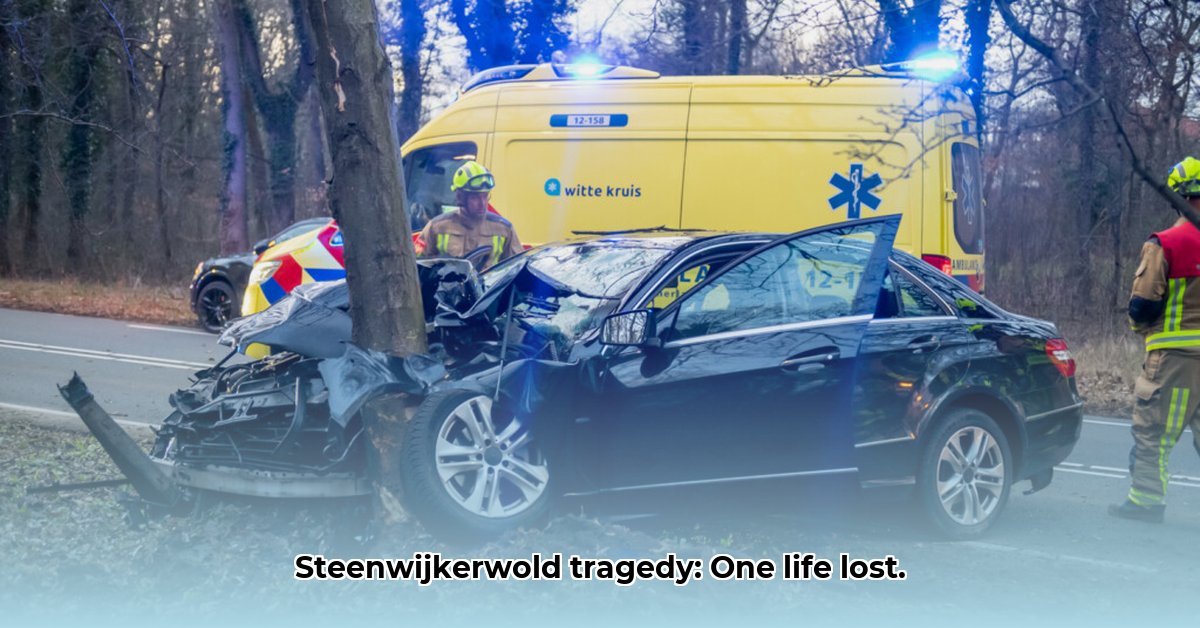
Ongeval Steenwijkerwold: A Heartbreaking Loss and a Call for Change
A single-vehicle accident near Steenwijkerwold has tragically claimed the life of a 26-year-old man, leaving another fighting for their life. This devastating event, which occurred on Steenwijkerdiep-Noord around midnight, has shocked the community and prompted a thorough investigation into its cause. The incident underscores the critical need for improved rural road safety. This report details the ongoing investigation, examines potential contributing factors, and proposes actionable steps to prevent similar tragedies.
A Night of Tragedy
The accident, involving two young men, both aged 26, from Steenwijk, took place on a stretch of Steenwijkerdiep-Noord, a sandy, unpaved road. One victim died at the scene, while the other, the driver, sustained serious injuries. Emergency services responded swiftly, but the challenging road conditions may have affected response times. The road closure immediately following the accident allowed for thorough forensic examination. The lack of eyewitnesses has made the investigation more challenging. Key questions remain: Why were they on this particular road at that time? What events led to the loss of control? These questions are central to the ongoing investigation.
Piece By Piece: Uncovering the Truth
The investigation is meticulously piecing together the events. Authorities are exploring several potential contributing factors: driver impairment (perhaps due to alcohol or fatigue), mechanical failure of the vehicle, and the condition of the unpaved road itself. Driving on loose sand (a zandweg) can be extremely hazardous, easily leading to loss of control. Forensic analysis of the vehicle and the accident scene will be crucial in determining the exact cause of this tragedy.
Possible Factors: A Web of Possibilities
Several factors may have contributed to the accident. These include driver impairment, the condition of the vehicle, poor road conditions, and possibly driver error. A risk assessment matrix highlights the potential factors and their relative impact:
| Factor | Likelihood | Impact | Overall Risk | Potential Mitigation Strategies |
|---|---|---|---|---|
| Driver impairment | Possibly Significant | Very Significant | High | Stricter DUI enforcement, public awareness campaigns on fatigue and driving |
| Road conditions | Moderate | Moderate | Medium | Road improvements, improved signage, lower speed limits |
| Vehicle malfunction | Less Likely | Moderate | Low | Regular vehicle maintenance, stricter safety standards |
| Poor night-time vision | Possibly Significant | Moderate | Medium | Enhanced road lighting, driver education on safe night driving |
Looking Ahead: Actions to Prevent Future Tragedies
This tragedy serves as a stark reminder of the need for proactive measures to improve rural road safety. Immediate and long-term actions are crucial:
Short-Term Actions (0-6 Months):
- Complete and thorough police investigation (including toxicology reports).
- Full forensic analysis of the vehicle to identify any mechanical failures.
- Comprehensive support services for the families of the victims and the injured driver.
Long-Term Actions (6 Months - 5 Years):
- Road improvements: Assess and upgrade the road surface on Steenwijkerdiep-Noord, potentially including improved drainage and gravel type. (Cost analysis needed)
- Enhanced visibility: Install better lighting and signage along the road, particularly if curves and blind spots exist. (Budget required)
- Driver education: Launch public awareness campaigns focusing on safe driving techniques on unpaved roads, particularly at night.
- Community support: Offer ongoing counselling and emotional support to those affected by the accident through community outreach programs.
How to Improve Rural Road Safety Following the Steenwijkerwold Accident
The Steenwijkerwold accident highlights systemic issues within rural road safety. This section outlines strategies to prevent future tragedies.
Unpacking the Accident: The Need for Data-Driven Solutions
The accident on Steenwijkerdiep-Noord underscores the critical need for improved road safety in rural areas. The investigation's findings, once available, will provide crucial data to develop targeted interventions. However, even without complete details, we can identify common contributing factors, such as speeding, poor road conditions, and inadequate signage.
Analyzing the Risks: Multiple Contributing Factors
Rural road accidents often stem from an interplay of factors. A thorough analysis is needed to understand the exact combination contributing to the Steenwijkerwold tragedy:
| Risk Factor | Probability | Impact | Mitigation |
|---|---|---|---|
| Speeding | High | High | Stricter enforcement, improved signage, speed limits |
| Hazardous Junctions | High | High | Road improvements, better signage, driver education |
| Adverse Weather | Moderate | High | Improved road maintenance, weather warnings |
| Poor Road Conditions | High | High | Road resurfacing, improved drainage |
| Inadequate Signage | High | Moderate | Improved signage and lighting |
Actionable Steps: Towards a Safer Future
Addressing these risks requires coordinated action from multiple stakeholders:
Short-Term Actions: 1. Enhanced police presence and speed enforcement on Steenwijkerdiep-Noord. 2. Immediate improvements to signage and road markings in high-risk areas. 3. Rapid assessment of road conditions and necessary repairs.
Long-Term Actions: 1. Develop a comprehensive road safety plan for rural areas, incorporating data-driven analysis. 2. Invest in road infrastructure upgrades, including resurfacing and improved drainage. 3. Implement targeted driver education programs focusing on rural driving challenges. 4. Community engagement initiatives for enhanced reporting of hazardous conditions.
The Steenwijkerwold tragedy compels us to act. A multi-faceted approach that combines improved infrastructure, stricter enforcement, and increased driver awareness is vital for ensuring the safety of our roads.